Data Cleanup + Reporting
Boost Payment Solutions
Problem
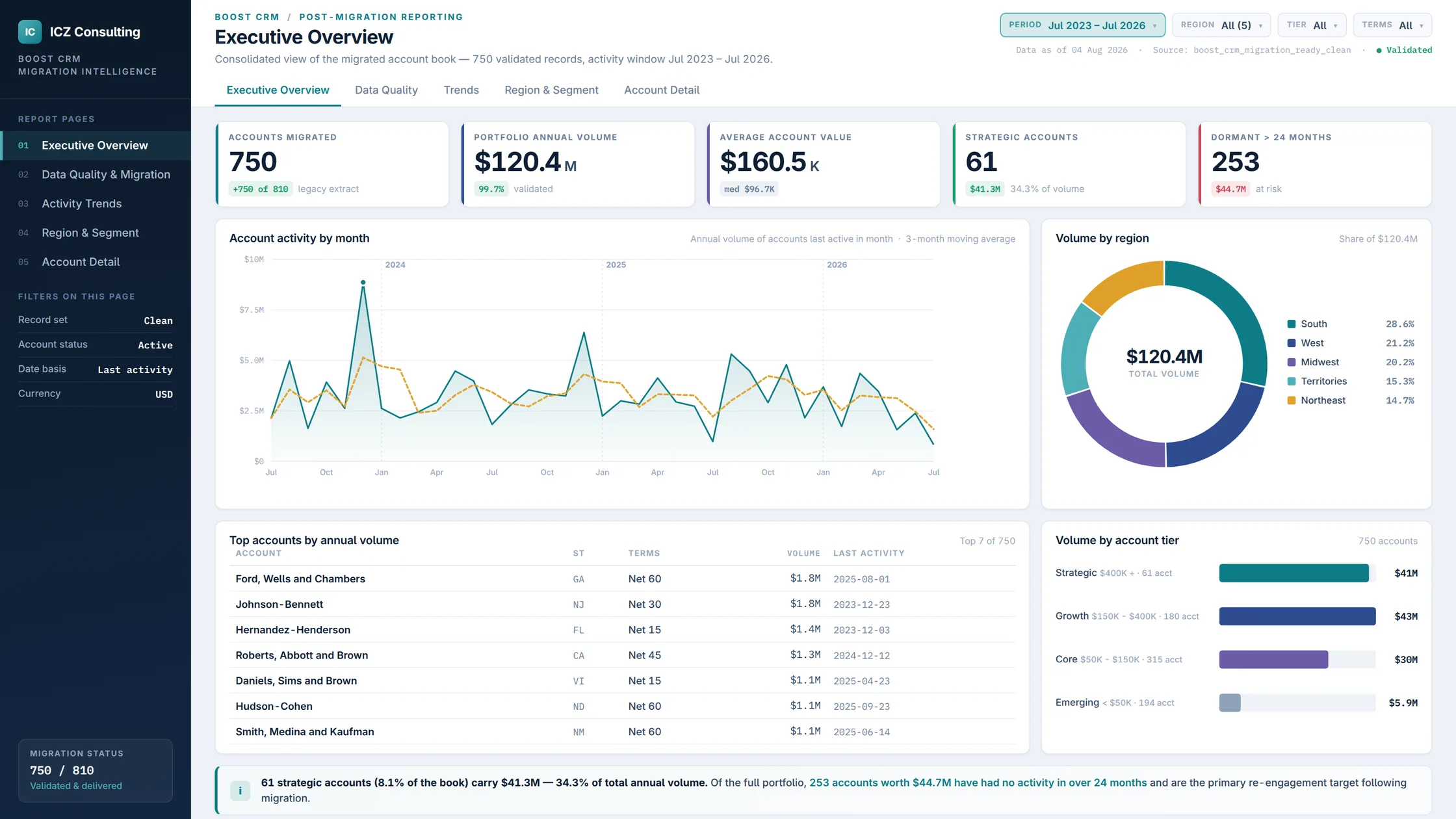
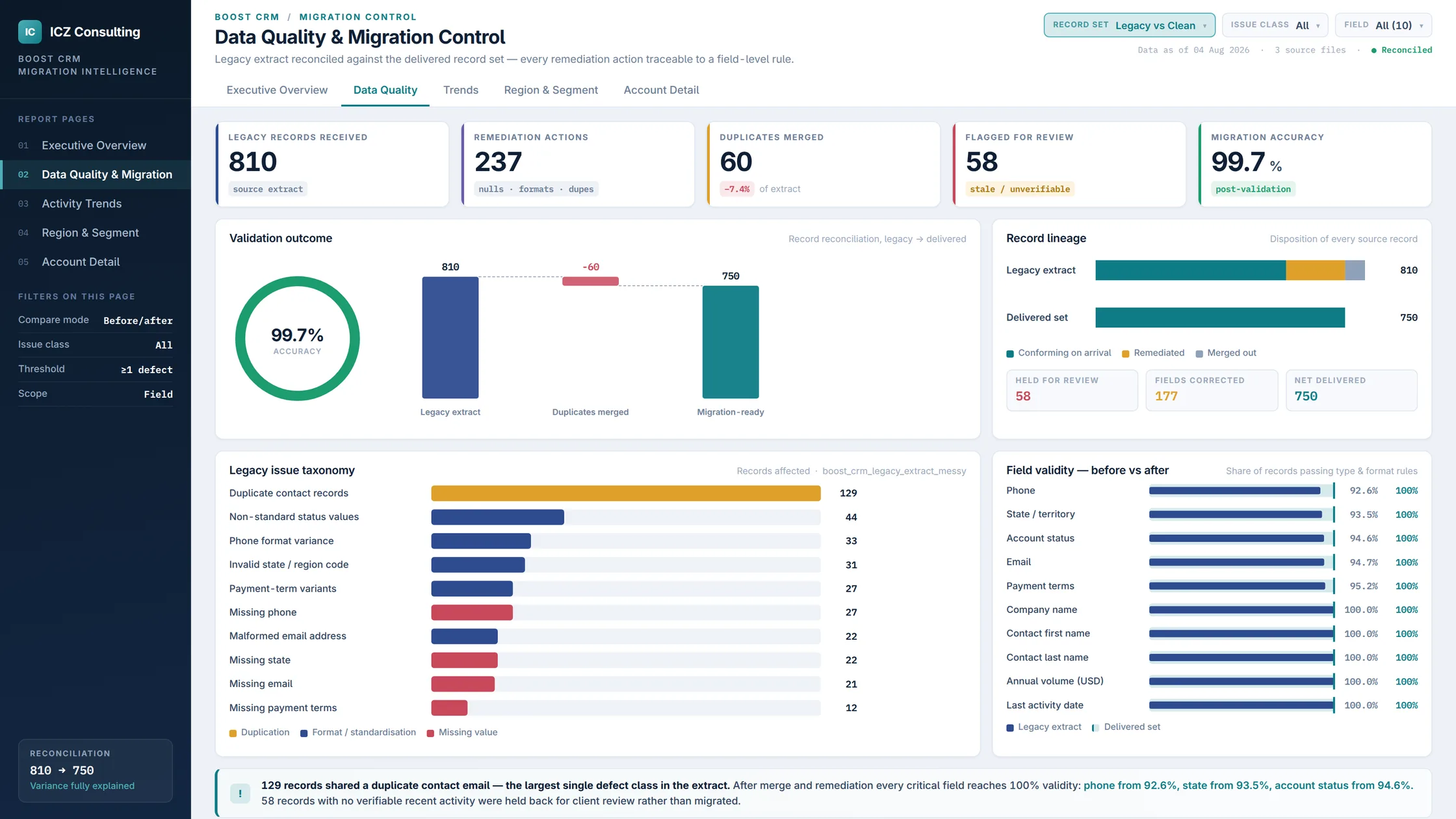
A payment solutions company was migrating its customer database from a legacy CRM to Salesforce. The existing data was full of duplicate records, outdated entries, and inconsistent formatting; migrating it as-is would have poisoned the new system from day one.
Approach
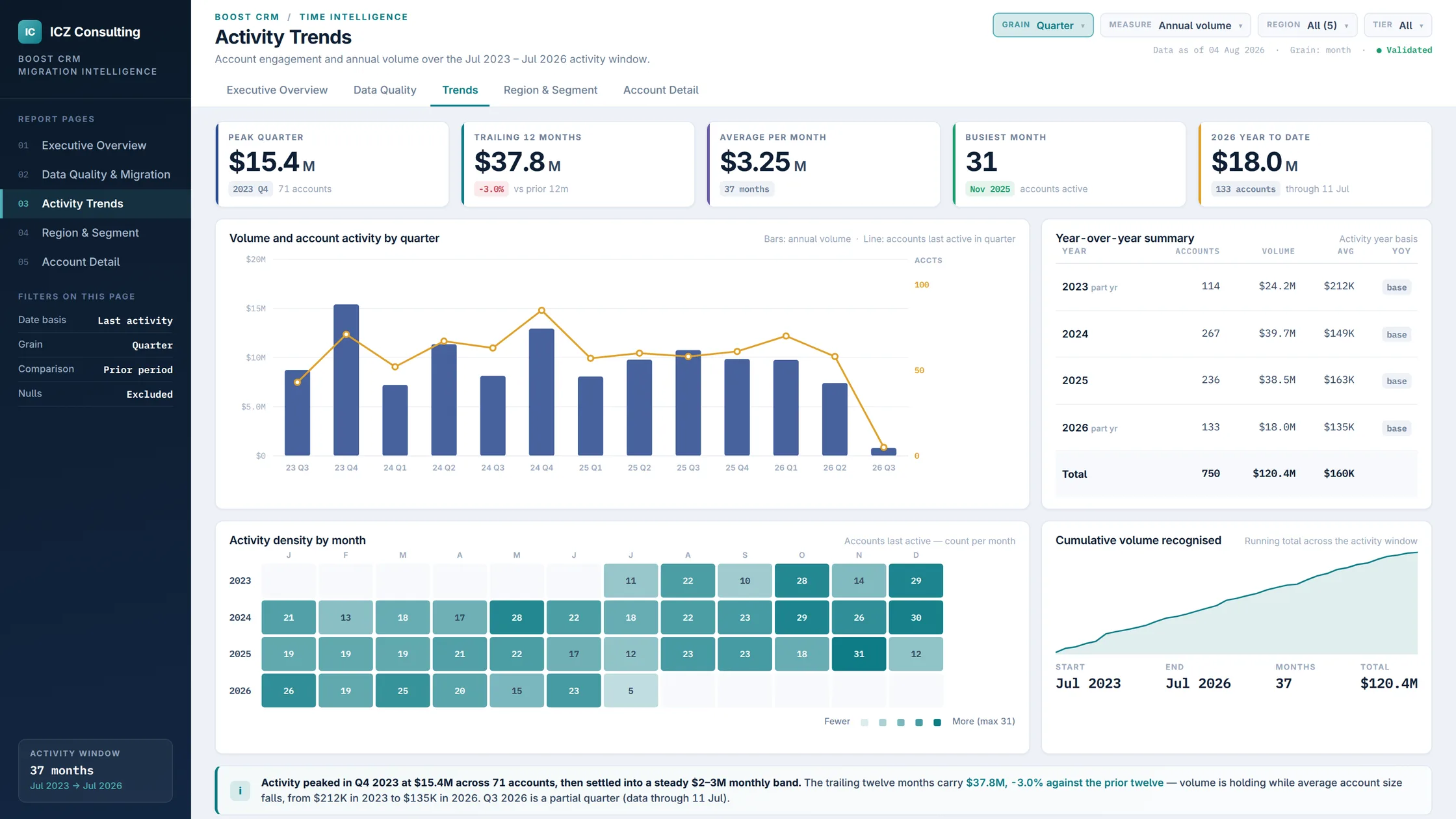
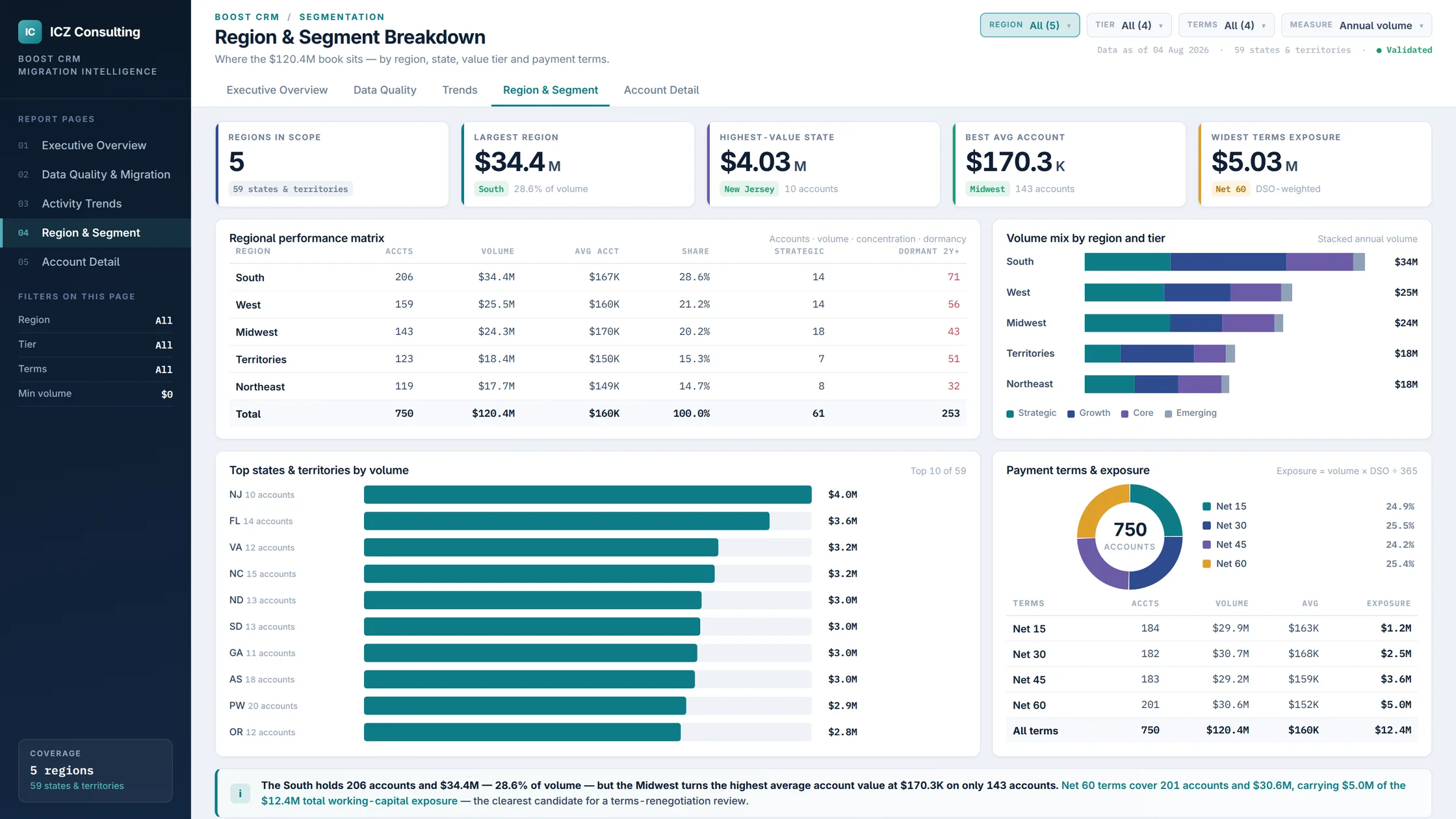
I cleaned and prepared the full customer dataset for migration. I built Excel VBA scripts to construct parallel spreadsheets that cross-verified migration accuracy record by record. I systematically flagged outdated and duplicate records for removal before transfer, making sure only verified data entered the new system. I also established documentation protocols for ongoing data quality management.
Result
Successful data migration to Salesforce with verified accuracy. Prevented legacy data quality issues from carrying into the new CRM. Clean data from day one.
Tech Stack
Excel
VBA
Salesforce (target CRM)
Representative example built with sample data. Original client work is under NDA.
SQL Query Development + Financial Reconciliation & Reporting
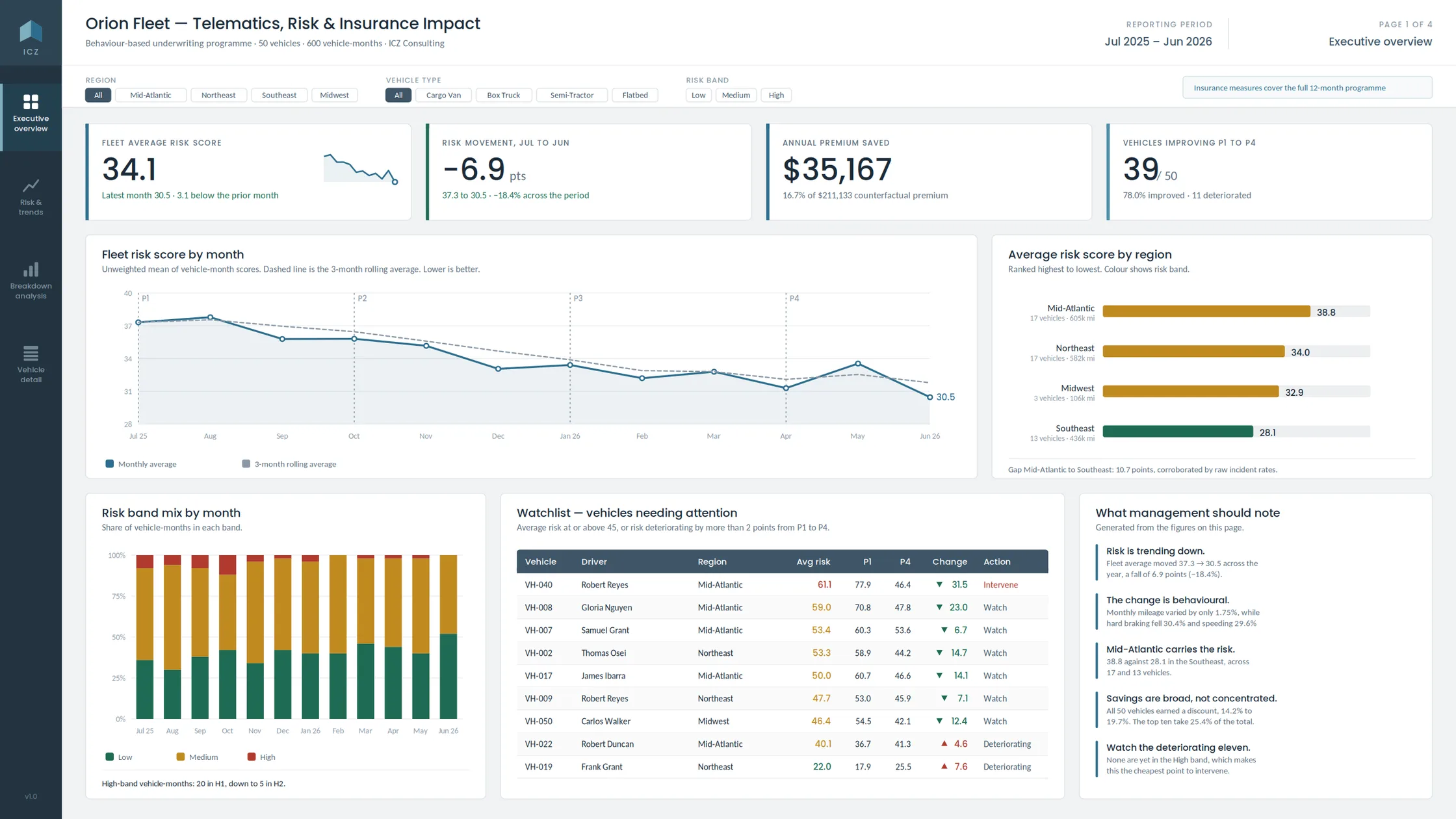
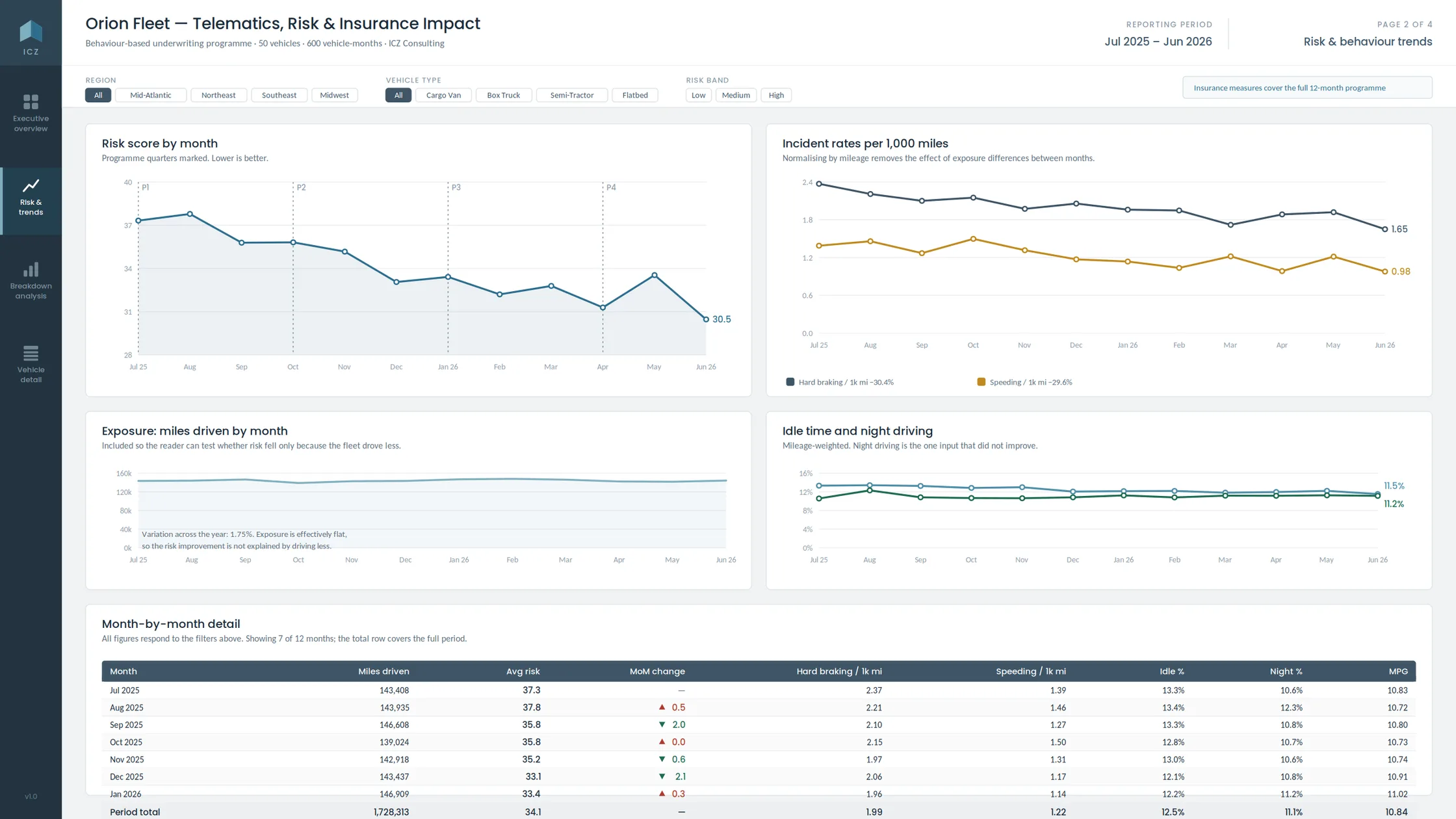
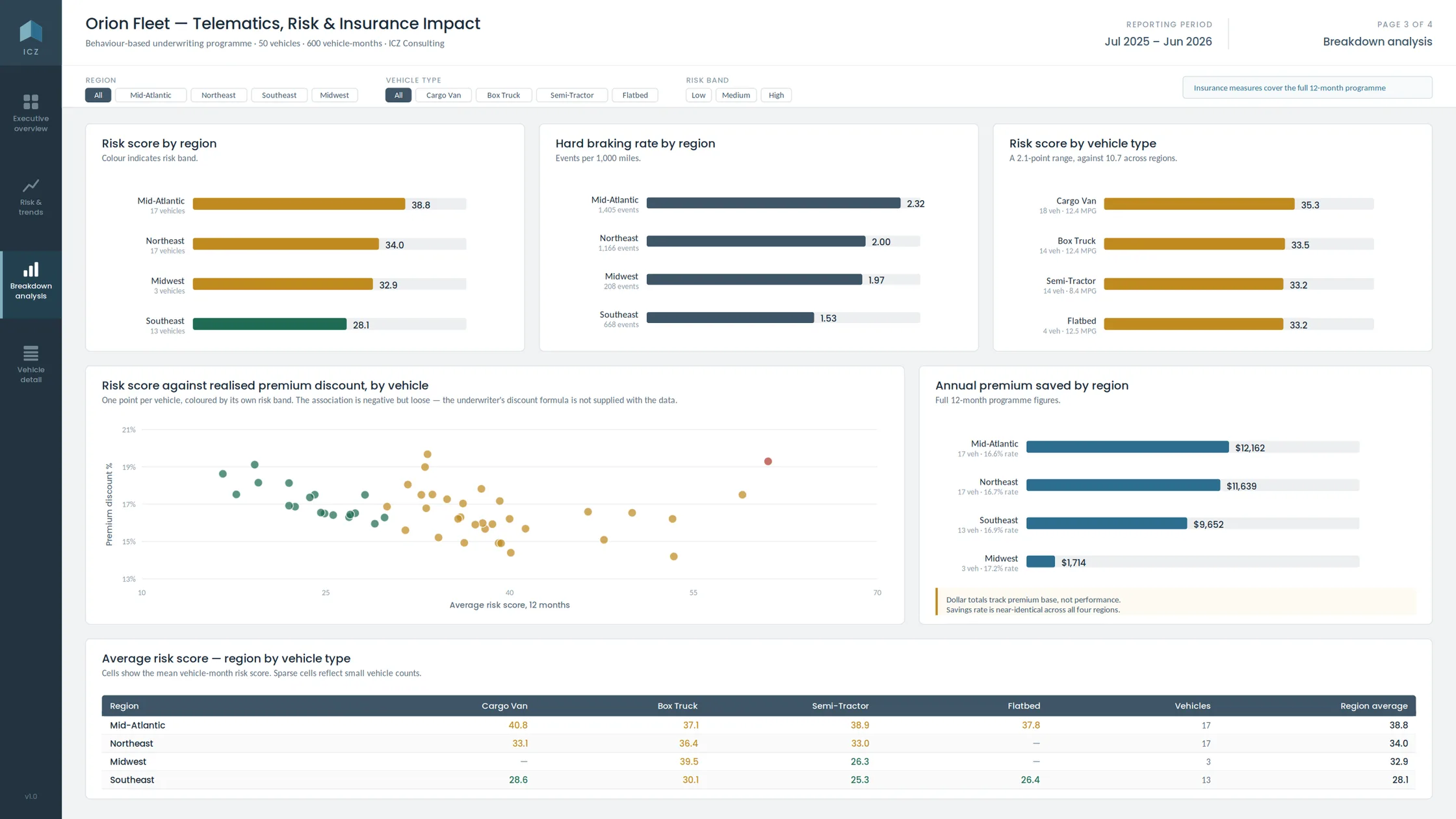
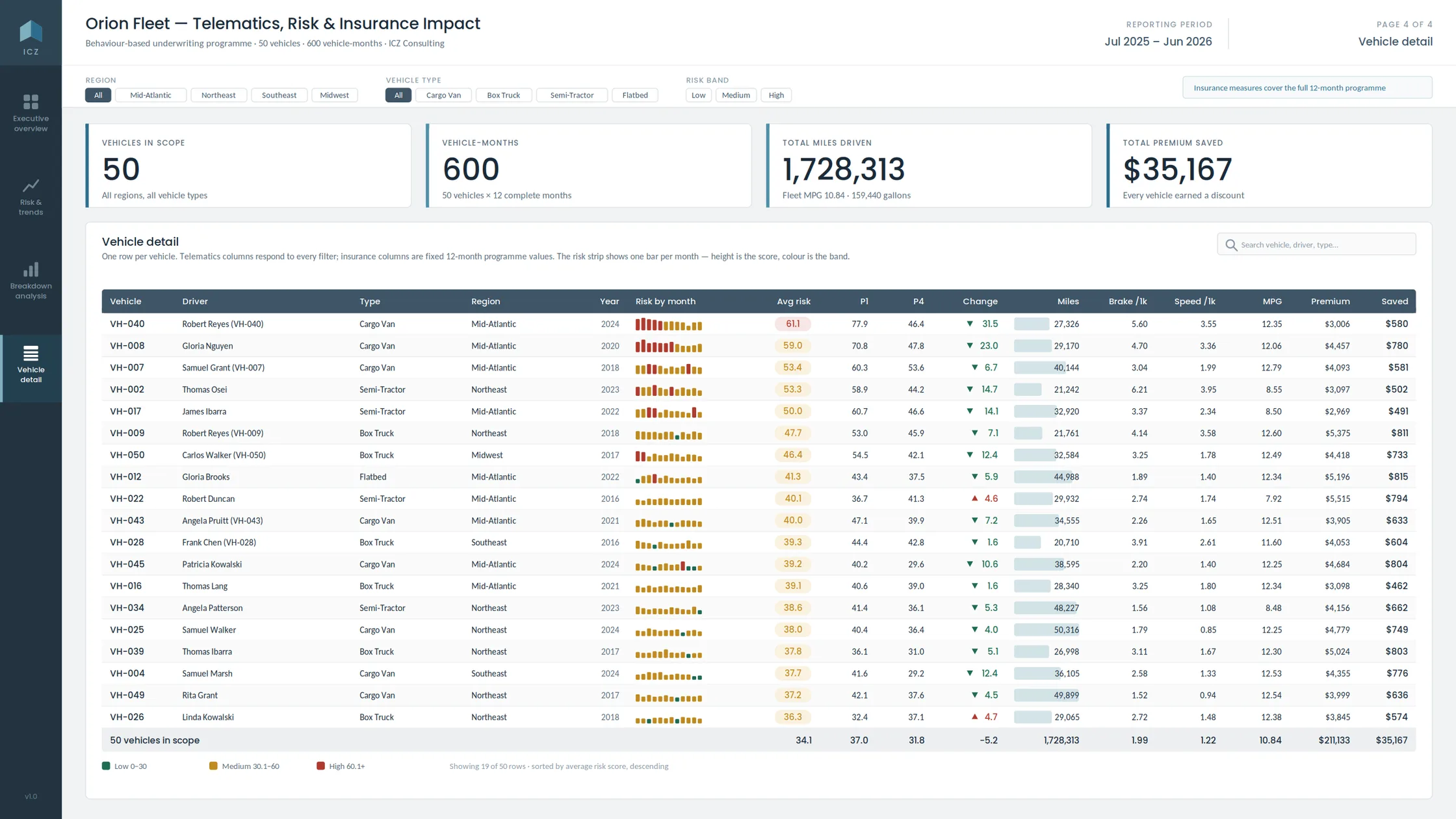
Orion Fleet Intelligence
Problem
Fleet management clients were overpaying on insurance because insurers had no visibility into granular driver behavior and telematics data. Internally, the analytics team spent 10+ hours per week manually generating client-specific reports: mileage breakdowns, diagnostics summaries, risk profiles, because existing tooling couldn't handle the query complexity at scale.
Approach
I developed the SQL analytical layer powering fleet telematics reporting: driver behavior scoring, mileage analysis, and diagnostics summaries. These scripts fed through SSIS pipelines into the Orion FI Dashboard, the client-facing reporting interface. I introduced self-service reporting parameters so clients could generate their own filtered reports without waiting on internal analysts. I also maintained data integrity across multiple insurance and fleet data systems through automated ETL scripts.
Result
$100K+ in annual client savings through data-driven risk profiling. 10+ hours per week of internal workload eliminated through self-service reporting. Clients went from waiting on analysts to running their own reports.
Tech Stack
SQL Server
SSIS
Orion FI Dashboard
Google Sheets/Excel
Representative example built with sample data. Original client work is under NDA.
Dashboard Build + SQL Query Development
EOS Group: Construction BI Dashboards
Problem
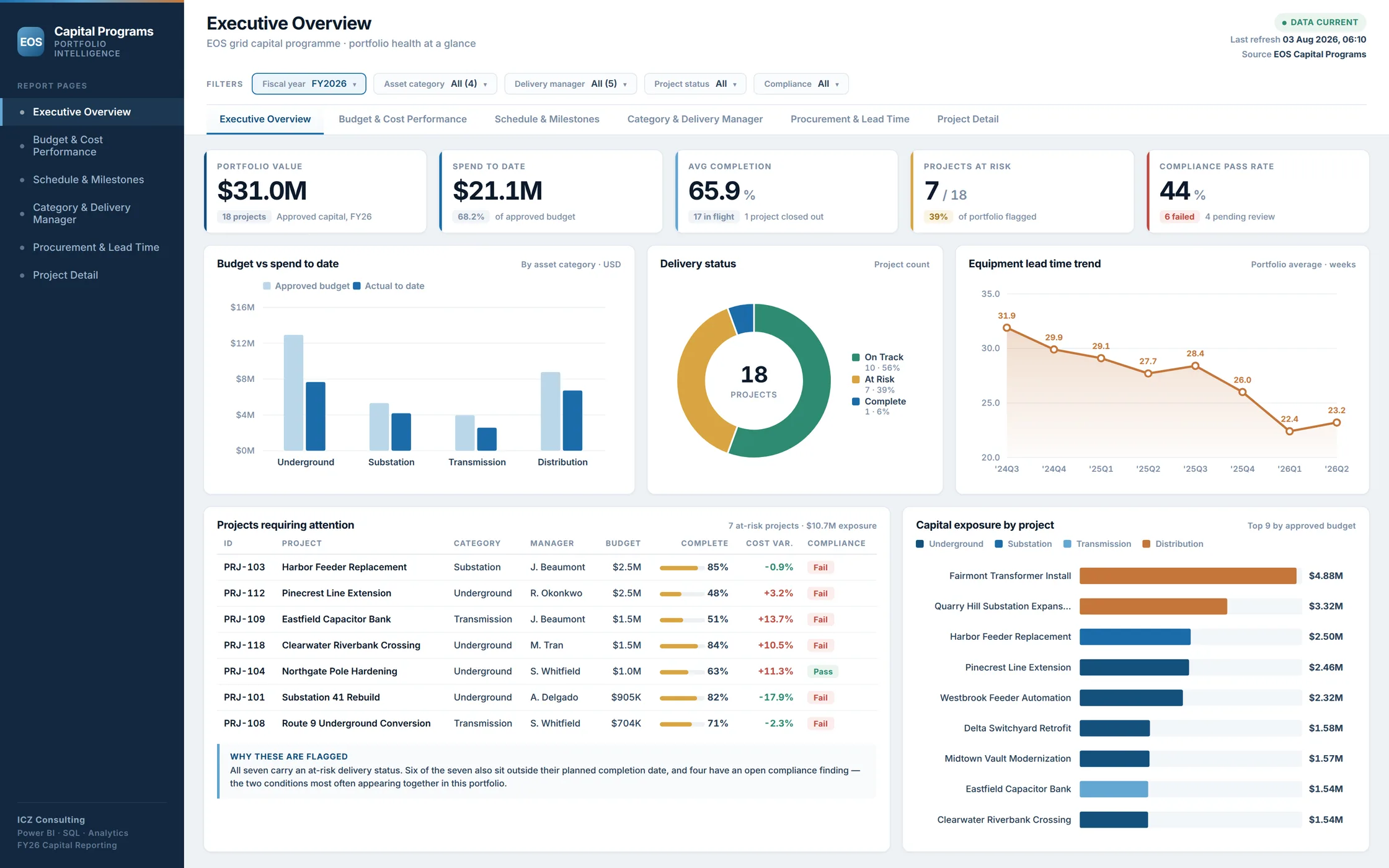
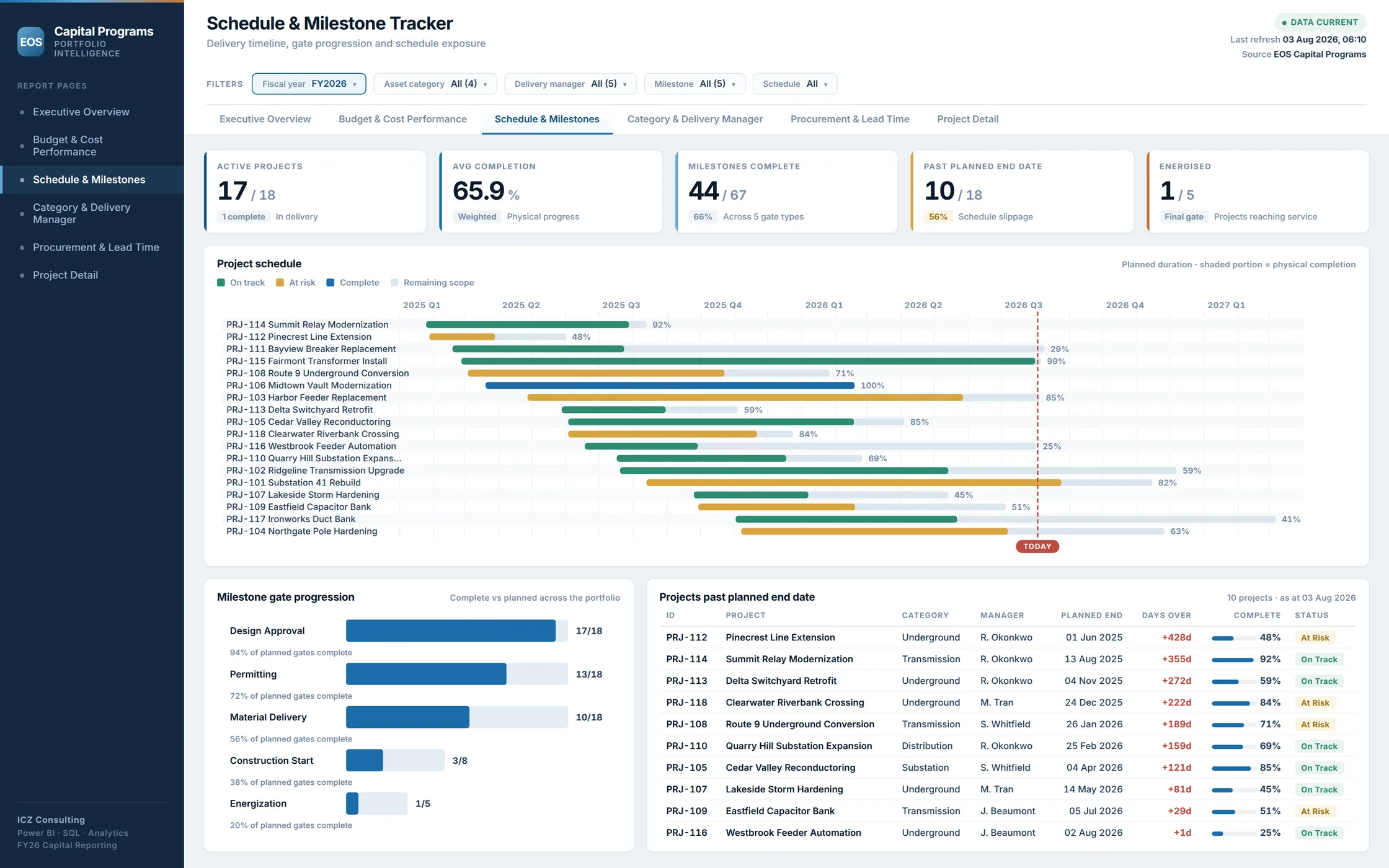
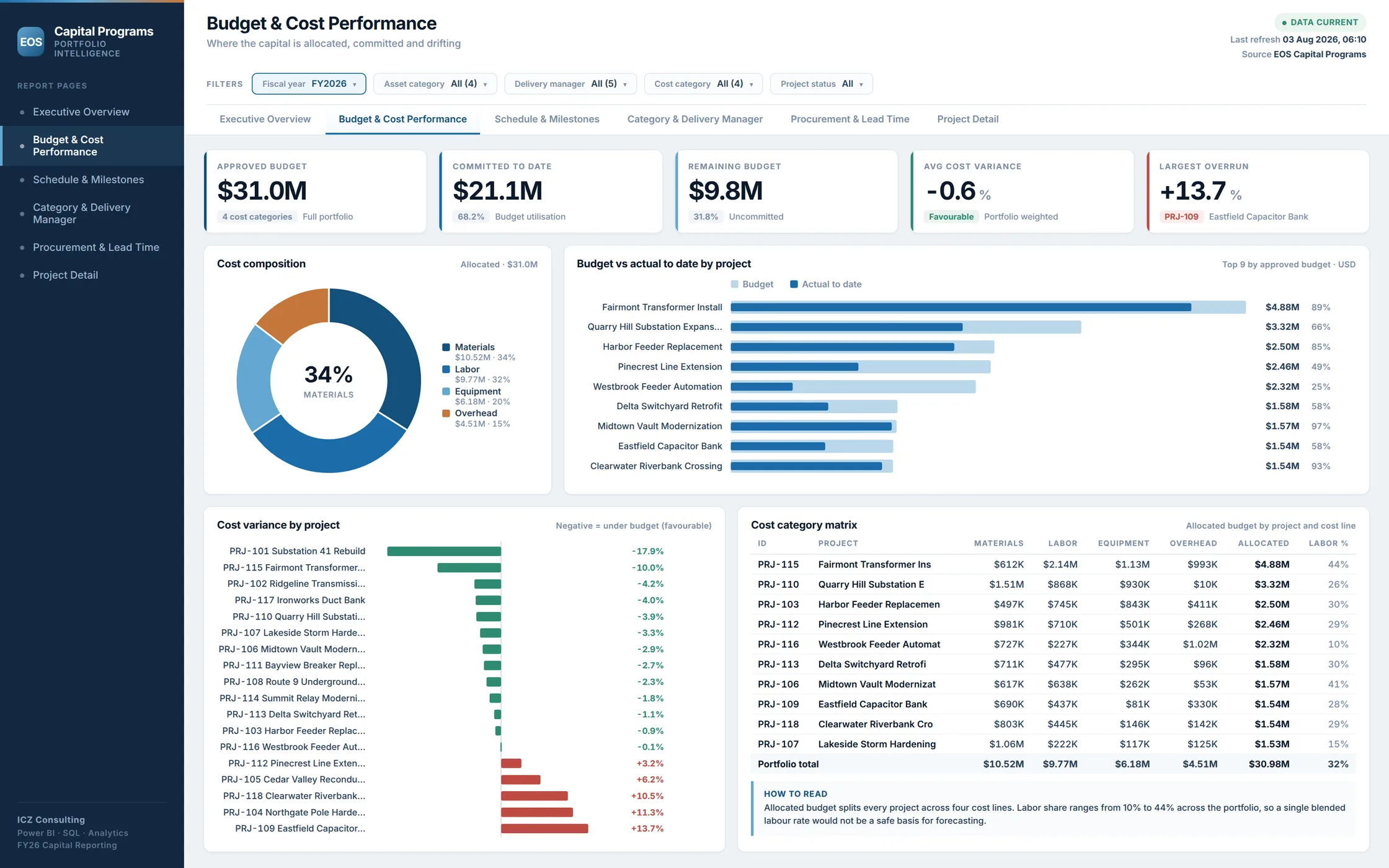
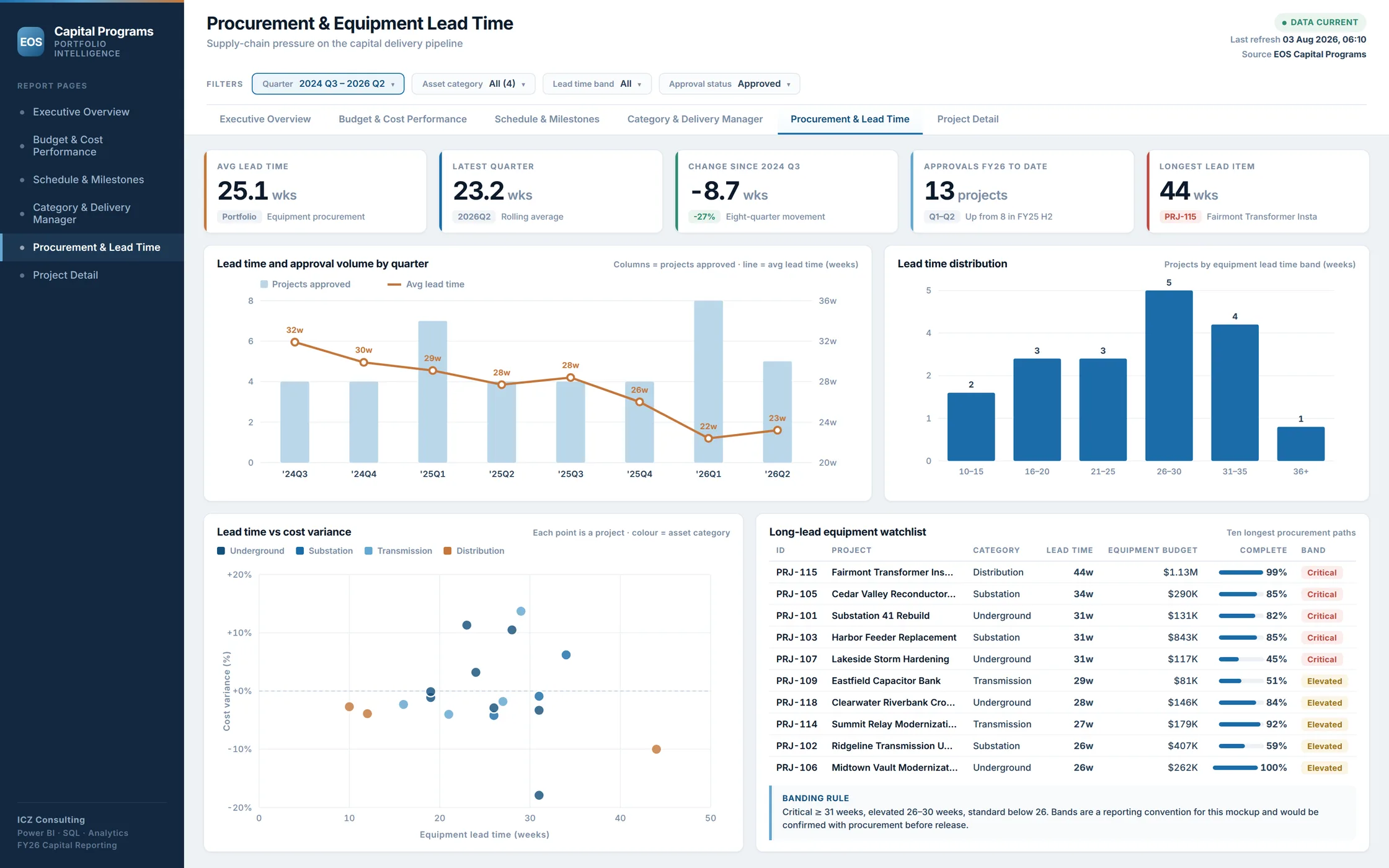
A construction-sector company needed real-time visibility into project viability metrics: lead times, key quantities, cost estimates, but data was siloed across systems with no automated way to surface decision-ready insights. Compliance tracking and performance monitoring lagged behind actual project status, creating risk in project approvals.
Approach
I created SQL stored procedures that automated viability calculations and compliance checks, feeding directly into Navigator, a custom C# application used by project teams for daily decision-making. I built a compliance architecture from scratch for First Energy: multi-factor analysis covering equipment availability, crew scheduling, and third-party supply chain data. I also built an interactive admin dashboard that let administrators trigger specific stored procedures based on user input, streamlining communication between junior staff and senior decision-makers with real-time project status updates. I implemented automated Python scripts to scrape supply chain data, letting clients preempt material shortages. And I authored comprehensive documentation so both technical and non-technical teams could adopt and maintain the systems.
Result
Real-time project viability data replaced manual reporting workflows. Automated compliance monitoring reduced the gap between what was happening on projects and what executives could see. The compliance architecture was adopted by additional clients including Eversource.
Tech Stack
SQL Server
C# (Navigator)
Python
Live Server Integration
Representative example built with sample data. Original client work is under NDA.
Full System Build (Python + SQL)
Timber Center IMS ~95% complete
Problem
A Zimbabwean timber import/retail business was running entirely on handwritten records. Inventory tracking, procurement, pricing, and financial reconciliation were all manual. The business had no visibility into stock levels, no way to trace transactions, and reconciliation took days of paper-shuffling. The system needed to work reliably in a cash-based economy with intermittent connectivity.
Approach
I designed and built a comprehensive retail management system from scratch. The architecture covers inventory tracking, procurement workflows, point-of-sale, and financial reconciliation, all running on an 88-table SQL Server database with a PyQt5 desktop interface. The system supports multi-currency transactions (USD/ZiG with live exchange rates), barcode scanning with 80ms keystroke detection, vendor management, stock transfers, low-stock alerts, and a full accounting module with double-entry GL journal entries across six templates. I migrated historical paper records into the structured database and designed the whole thing to function offline-first, syncing when connectivity is available.
Result
Metrics pending. To be captured after project ships: time saved on reconciliation, error reduction, decision-making improvements, user adoption rates.
Tech Stack
Python
PyQt5
SQL Server (88 tables)
SQLAlchemy
Excel Export
Offline-capable
Representative example built with sample data. Original client work is under NDA.